Tower Parking Systems in India: How They Work & Why Builders Prefer Them
As urban cities in India face shrinking land availability and rising vehicle ownership, tower parking systems have emerged as one of the smartest solutions for developers. These vertical parking structures maximize space, reduce construction costs, and offer a premium experience to end users.
In this article, we break down how tower parking systems work and why more Indian builders are choosing them for residential and commercial projects.
What Is a Tower Parking System?
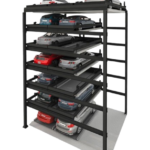
A tower parking system (also called vertical or automated tower parking) is a computerized mechanical structure that parks cars vertically in a narrow footprint.
Instead of large ramps or driveways, the system uses a lift-and-slot mechanism to move cars up and down automatically.
It’s ideal for:
- High-density urban locations
- Residential towers
- Commercial complexes
- Hotels and mixed-use developments
How Tower Parking Systems Work
Although systems differ by brand, most tower parking units follow a similar automated flow:
1. Car Entry
The driver parks the vehicle on a ground-level pallet inside the entry bay.
Sensors check:
- Vehicle size
- Wheel alignment
- Doors closed
- No passengers inside
2. Automated Lift Operation
Once validated, the central lift engages and carries the car vertically to its assigned slot.
3. Slot Allocation
Using software logic, the system selects the nearest available slot to reduce cycle time.
4. Car Retrieval
When the user wants the car back:
- The system fetches the pallet
- Brings it down via the lift
- Presents it safely at the entry bay
Average retrieval time: 60–120 seconds depending on the system.
Why Builders Prefer Tower Parking Systems in India
1. Maximum Parking in Minimum Land
Tower systems can park 30 to 100+ cars in a footprint as small as 2–3 conventional parking spaces.
This directly increases:
- FSI efficiency
- Saleable area
- Project profitability
2. Faster Installation & Lower Civil Work
Compared to basement construction:
- No deep excavation
- Minimal RCC work
- Faster commissioning
Builders save both time and cost.
3. Premium Amenity for Buyers
Tower parking gives a luxury feel:
- No driving ramps
- No tight turns
- No risk of scratches
- Automated, touch-free operation
This adds strong market value to any project.
4. Enhanced Safety & Security
- 24/7 CCTV integration
- No unauthorized entry
- Fire-safe structure
- No human access inside the parking area
Vehicles remain safer compared to open or basement parking.
5. Low Operating Costs
Tower parking systems consume moderate power and require limited manpower:
- 1 operator can handle 60–100 cars
- Energy usage is efficient due to counterweight lift mechanisms
This makes long-term OPEX very attractive for societies and developers.
6. Future-Ready Urban Solution
With Indian cities becoming denser, automated systems are aligned with:
- Smart City goals
- Sustainable construction
- Modern urban mobility infrastructure
Where Tower Parking Works Best
- Premium residential projects
- Commercial towers in city centres
- Hospitals
- Hotels
- Malls
- Redevelopment projects with limited plot size
Tower parking systems are transforming how Indian builders plan and deliver parking.
They maximize land value, offer a premium buyer experience, and allow developers to build smarter, more efficient projects.