Mechanical vs. Hydraulic Parking Systems: Which Is Better for Your Project?
As urban spaces get tighter and land prices continue to rise, developers and facility owners are turning to advanced parking technologies to maximize capacity without expanding their footprint. Among the most widely adopted solutions are mechanical and hydraulic parking systems. Both offer efficiency, but each comes with its own engineering approach, cost structure, and suitability for different project types.
If you’re deciding which technology fits your building, here’s a clear comparison to guide your decision.
1. How Mechanical Parking Systems Work
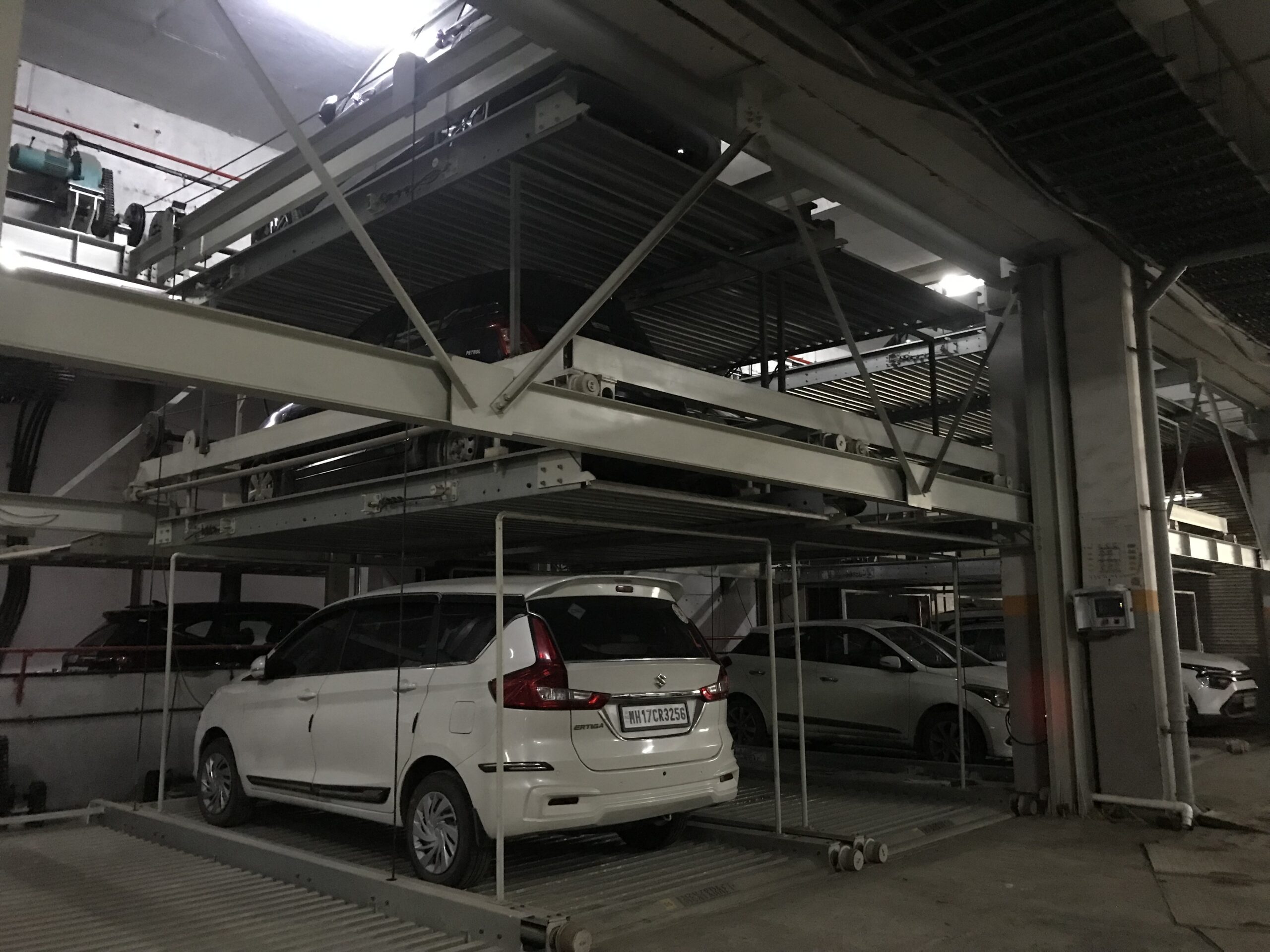
Mechanical parking systems rely primarily on motors, chains, gears, and steel structures to move platforms vertically or horizontally. These systems are commonly used in stack, puzzle, and tower parking units.
Key Advantages
- Low maintenance: No oil-based components, fewer fluid leaks, and simpler overall servicing.
- Longer lifespan: Mechanical parts like motors and chains generally offer high durability under heavy usage.
- Cleaner operation: Since no hydraulic oil is used, the systems are more environment-friendly and suitable for basements or premium properties.
- High cycle efficiency: Ideal for projects with continuous vehicle movement throughout the day.
Ideal For
- Residential societies
- Commercial buildings
- Projects requiring high reliability and low downtime
- Developers looking for long-term ROI
2. How Hydraulic Parking Systems Work
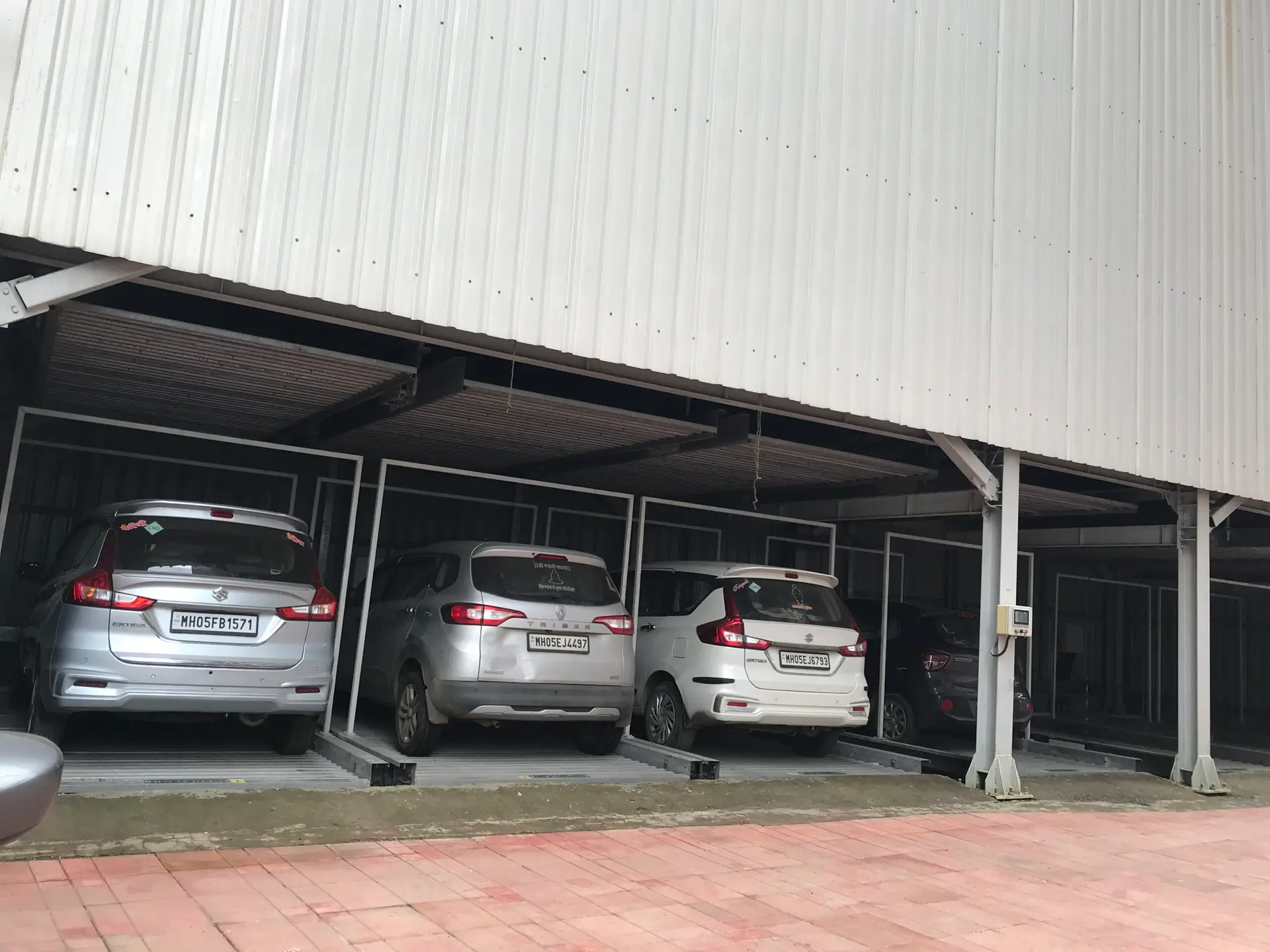
Hydraulic systems use pressurized fluid to raise or lower platforms. They are popular in basic stackers and some compact parking solutions.
Key Advantages
- Lower initial cost: Hydraulic units are often cheaper to purchase, making them attractive for budget-sensitive projects.
- Smooth lifting motion: Hydraulics offer a controlled, gradual movement.
- Simpler installation: Fewer moving parts compared to complex mechanical systems.
Challenges
- Higher maintenance: Hydraulic fluid needs periodic replacement; leaks can lead to staining or environmental concerns.
- Heat build-up: Continuous use may reduce efficiency due to thermal expansion of fluid.
- Slower operation: Not ideal for high-traffic commercial spaces.
Ideal For
- Small residential projects
- Low-traffic areas
- Sites with limited budget but basic parking needs
3. Side-by-Side Comparison
Feature | Mechanical Systems | Hydraulic Systems |
Cost (Initial) | Higher | Lower |
Maintenance | Low | Moderate to High |
Speed & Efficiency | Fast, consistent | Slower in continuous usage |
Lifespan | Longer | Medium |
Suitability | High-traffic, commercial, premium projects | Low-traffic, basic applications |
Environmental Impact | No oil leaks | Possible oil leakage |
Noise Levels | Slightly higher motor sound | Generally quieter |
4. Which One Should You Choose?
Choose Mechanical Parking If:
- Your project involves commercial spaces, malls, offices, or large housing societies.
- You expect high vehicle movement throughout the day.
- Long-term reliability and minimal breakdowns are a priority.
- You want a cleaner, oil-free system with long service life.
Choose Hydraulic Parking If:
- Your project has a lower usage pattern.
- You are looking for a cost-effective parking solution.
- Space constraints allow only a simple two-level stacker.
5. Final Decision: Think Long-Term
While hydraulic parking systems work well for smaller, lower-duty projects, mechanical parking systems offer superior value when you consider:
- Long-term maintenance
- System durability
- Efficiency in daily operations
- Safety and user experience
For most builders and developers today—especially in metros—mechanical systems have become the preferred choice due to their performance and long-term cost efficiency.