Is Automated Parking Safe?
A Strategic, Technical, and Risk-Management Perspective for Modern Developers
In the evolving landscape of urban infrastructure, automated parking systems (APS) are no longer futuristic concepts—they are strategic necessities. As land costs rise, urban density increases, and buyers demand premium amenities, developers are turning toward intelligent mechanical parking solutions.
Yet one question consistently surfaces in boardrooms and buyer meetings alike:
“Is automated parking safe?”
The short answer is yes.
The detailed answer requires understanding engineering principles, global standards, risk mitigation systems, and operational protocols.
As Nextkraft continues to design and implement intelligent parking infrastructure, this article provides a research-backed, technical exploration of automated parking safety.
1. Understanding Automated Parking Systems
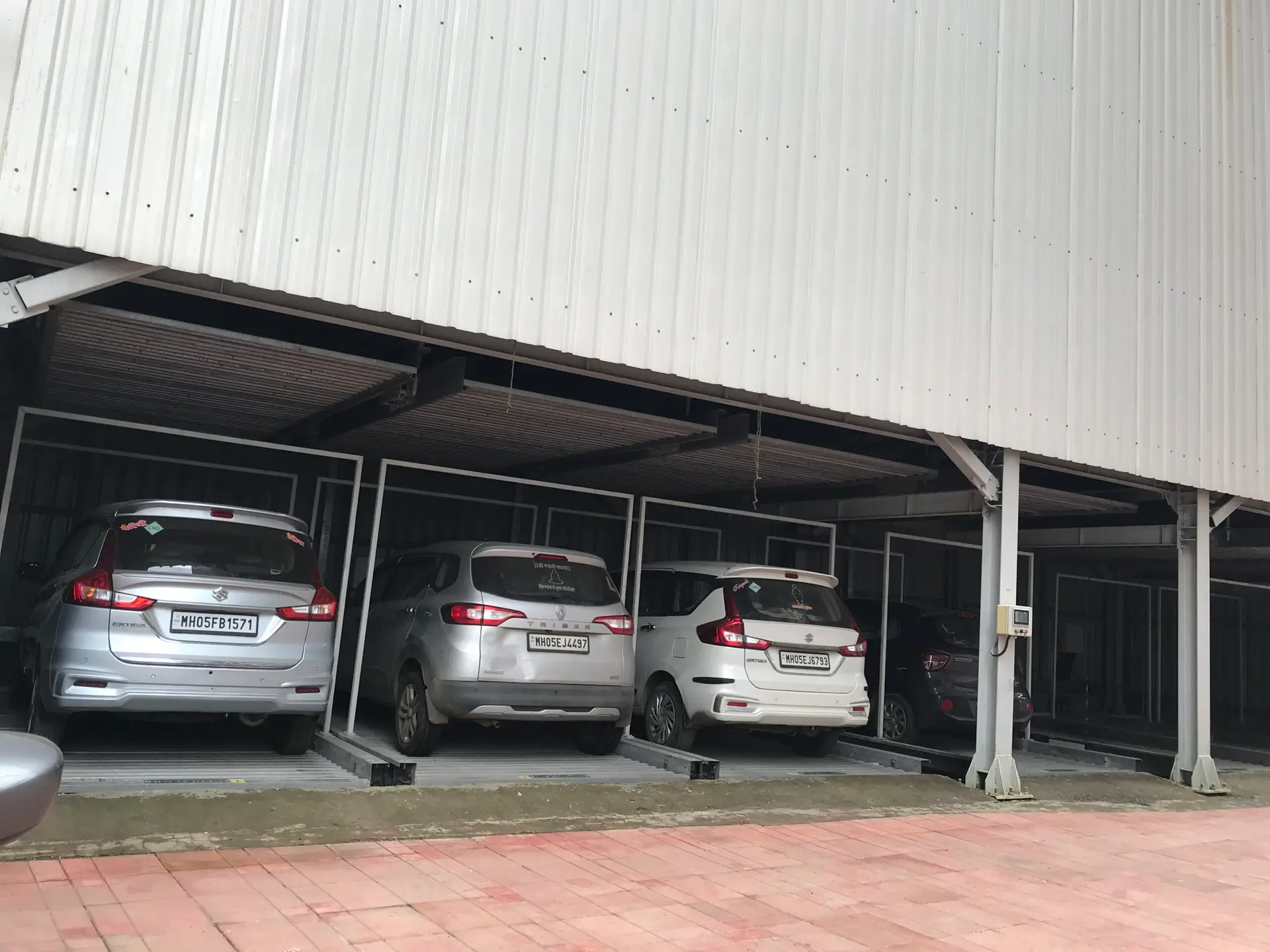
Automated parking systems are engineered platforms that transport vehicles using mechanical lifts, pallets, conveyors, and robotics—without driver movement inside the parking structure.
Unlike conventional ramp parking:
No human driving occurs inside the parking stack.
Vehicles remain switched off during movement.
Access is restricted during operation.
Movement is sensor-controlled and PLC-programmed.
This fundamental shift actually reduces multiple traditional parking risks.
2. Risk Comparison: Conventional vs Automated Parking
| Risk Factor | Conventional Parking | Automated Parking |
|---|
| Human driving errors | High | Eliminated |
| Vehicle collision | Frequent | Nearly eliminated |
| Pedestrian accidents | Possible | Zero inside stack |
| Theft / vandalism | Possible | Extremely low |
| Fire spread | Higher (open movement) | Controlled compartmentalization |
| Structural misuse | Common | Controlled access |
From a safety engineering standpoint, automated parking reduces the most unpredictable variable in any system: human error.
3. Engineering Safety Mechanisms in Automated Parking
Modern automated systems such as those deployed by Nextkraft integrate multiple redundant safety layers:
3.1 Sensor-Based Detection Systems
Ultrasonic and infrared sensors detect vehicle positioning
Load sensors ensure weight compliance
Obstruction detection prevents movement if blockage occurs
3.2 Programmable Logic Controllers (PLC)
Industrial-grade PLCs control system movement with:
3.3 Mechanical Safety Locks
Anti-fall locking devices
Emergency braking systems
Redundant chain or cable systems
3.4 Fire & Electrical Safety
Safety is not dependent on a single mechanism—it is built through layered engineering redundancy.
4. What Happens During a Power Failure?
A common concern among developers and buyers is system reliability during outages.
Well-designed automated parking systems include:
In the event of power loss:
In contrast to elevators, automated parking systems operate under lower dynamic load conditions and include dedicated mechanical arrest systems.
5. Fire Safety Considerations
Fire safety in parking structures is a legitimate concern. However, automated parking provides certain structural advantages:
Vehicles are parked in isolated bays
No engine heat from maneuvering
Reduced human presence
Controlled ventilation systems
Additionally, compliance with:
National Building Code (NBC) guidelines
Local fire authority approvals
Structural load certifications
ensures regulatory safety alignment.
For premium residential and commercial projects, automated parking can even improve fire compartmentalization versus open ramp structures.
6. Structural Integrity & Load Design
Automated parking systems are engineered based on:
High-strength steel structures undergo:
When installed by certified engineering teams, structural safety exceeds typical ramp slab usage subjected to uncontrolled vehicle movement.
7. Operational Safety & User Experience
One overlooked advantage of automated parking safety is behavioral control.
Users:
Enter a designated cabin.
Exit the vehicle.
Confirm via digital interface.
System handles the rest.
There is:
For elderly residents, women drivers, and luxury buyers, this improves perceived and real safety.
8. Are There Accidents in Automated Parking Systems?
Statistically, incidents are rare and typically linked to:
The technology itself, when compliant and professionally maintained, has strong global performance records in countries such as Japan, Germany, South Korea, and UAE.
Safety is not about automation alone—it is about engineering quality + maintenance discipline.
9. The Developer’s Risk Perspective
From a developer’s standpoint, automated parking offers:
Reduced liability from driving accidents
Controlled vehicle access
Higher project compliance credibility
Stronger premium positioning
In high-density metro markets like Mumbai, Delhi NCR, Pune, and Bangalore, space optimization is directly tied to ROI. Automated parking provides:
✔ Higher saleable area
✔ Reduced ramp footprint
✔ Efficient basement usage
✔ Enhanced brand perception
Safety, therefore, becomes both an engineering advantage and a commercial differentiator.
10. Addressing Buyer Psychology
Buyers often ask:
“What if my car gets stuck?”
“What if the system fails?”
“Is it safe for luxury cars?”
The correct approach is transparent education:
When positioned correctly, automated parking shifts from “new risk” to “premium technology.”
11. The Role of Professional Installation
Automated parking safety is directly proportional to:
Structural engineering validation
Compliance with local building norms
Quality of mechanical components
After-sales service infrastructure
At Nextkraft, system design is not just mechanical—it is integrated with architectural planning, structural coordination, and long-term service strategy.
Conclusion: Is Automated Parking Safe?
Yes—when engineered, installed, and maintained professionally.
In fact, compared to conventional ramp parking, automated systems:
For modern urban projects, automated parking is not a compromise—it is a controlled, engineered, and scalable safety solution.
As cities grow vertically, safety must evolve intelligently.
Automation, when executed responsibly, is not a risk.
It is an upgrade.
About Nextkraft
Nextkraft delivers advanced automated and mechanical parking solutions tailored for modern developers and infrastructure projects. Designed for safety, efficiency, and long-term performance, our systems transform parking from a compliance necessity into a value multiplier.